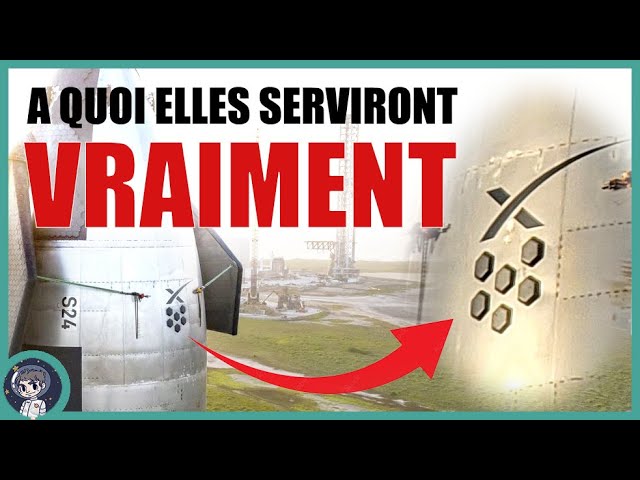
STARSHIP, ces antennes qui doivent réaliser l'impossible - On Se l'Demande #27 - Le JDE
Keywords
Summary
138 words
Critical Evaluation
Value of the Information & Strength of the Argument
The video provides valuable information by explaining a complex technical problem in an accessible manner, using historical examples to illustrate the evolution of solutions. The argumentation is solid, logically progressing from the problem to the solution and then to its application to Starship. It correctly explains the physics of plasma and the rationale behind using satellite relays, and it appropriately notes the uncertainties and risks involved in Starship’s first flight. The reasoning is clear and well-supported by the historical context.
Scientific Rigor, Source Quality, Title Accuracy
The video demonstrates scientific rigor by referencing well-documented historical events (Apollo 13, Space Shuttle, TDRSS) and citing the FCC filing for Starlink use. The sources mentioned are credible (NASA, SpaceX, FCC). The title accurately reflects the content, focusing on the antennas and the challenge of reentry communication. The video does not overstate claims and acknowledges the speculative nature of Starship’s performance.
156 words
Title / Content Match
The title accurately reflects the content, focusing on the antennas designed to overcome the reentry blackout for Starship, while the video also provides broader context on the problem and historical solutions.
Quality & Reliability
8/10
The video provides a well-structured and historically grounded explanation of the communication blackout during atmospheric reentry, referencing Apollo 13, the Space Shuttle program, and the TDRSS. It clearly explains the physics of plasma interference and the engineering solutions, with appropriate caveats about uncertainties regarding Starship. The content is consistent with known facts and avoids sensationalism.
Chapters
Cited Sources
- Forum de la conquête spatiale — Mentioned as a general source for space-related discussions.
- LabPadre YouTube Channel — Cited as a source for Starship development updates.
- NASA Spaceflight YouTube Channel — Cited as a source for spaceflight coverage.
Concurring Sources
- NASA - TDRSS — Official NASA page describing the TDRSS network.
- SpaceX FCC Filing — FCC filing for Starlink use during Starship's first flight.
External References
Contribution & Novelties
The video provides a clear and engaging explanation of a niche but crucial aspect of spaceflight—reentry communication blackout—and how SpaceX intends to address it with Starlink. It connects historical solutions (TDRSS) to modern innovations, offering a unique perspective on the engineering challenges of Starship.
Pour aller plus loin :
- TDRSS - Wikipedia — Overview of the satellite relay system used by NASA.
- Atmospheric reentry - Wikipedia — General principles of reentry and associated challenges.
- SpaceX Starlink - Wikipedia — Information on the Starlink constellation and its applications.
87 words
Radar Profile
The radar profile shows high scores in information quantity, quality, and reliability, with a slightly lower technical level, indicating a well-balanced and accessible scientific explanation. The content is strong in factual accuracy and educational value, with minor limitations in depth for advanced audiences.
💬 Très positif. Sur les 30 commentaires analysés, le public exprime un fort enthousiasme pour la vidéo et le sujet, avec des prédictions variées sur le vol du Starship, allant de l'échec spectaculaire au succès, mais toujours dans un esprit de soutien et de curiosité scientifique.