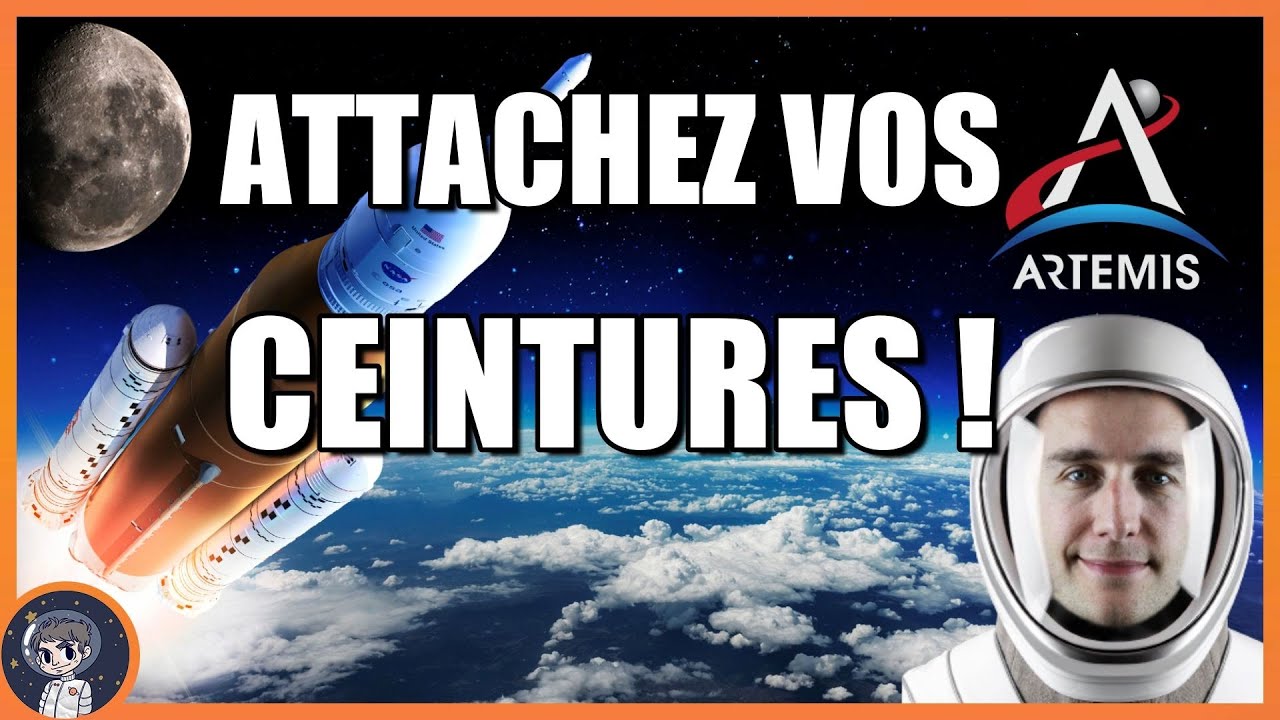
Décollage de la plus GROSSE fusée du MONDE ! En live avec Le Journal de l'Espace
Keywords
Summary
156 words
Critical Evaluation
Value of the Information & Strength of the Argument
The video offers valuable real-time coverage of a historic space launch, providing context and explanations that enhance viewer understanding. The host’s enthusiasm and ability to explain complex topics in an accessible manner add to the value. However, the argumentation is sometimes informal, with the host admitting to not having exact figures or making rough estimates, which slightly weakens the scientific rigor.
Scientific Rigor, Source Quality, Title Accuracy
The video does not cite specific sources during the stream, but the description includes links to NASA, ESA, and other space-related channels. The host mentions using Twitter for real-time updates, which is not a primary source. The title accurately reflects the content, and the video is well-structured with clear chapters. The host’s explanations are generally accurate, though some figures (e.g., cost estimates) are approximate and not verified.
143 words
Title / Content Match
The title accurately reflects the content, which is a live coverage of the launch of the most powerful rocket currently in service, the SLS.
Quality & Reliability
7/10
The video provides a live commentary of the Artemis 1 launch, with accurate historical and technical context, but includes some unverified figures and informal estimates. The host acknowledges uncertainty on some numbers and relies on general knowledge rather than citing specific sources during the stream.
Chapters
Cited Sources
- LabPadre YouTube Channel — Mentioned as a source for live streams and updates on space launches.
- NASA Spaceflight YouTube Channel — Referenced as a source for spaceflight news and coverage.
- Forum de la conquête spatiale — Mentioned as a community forum for space enthusiasts.
- Le Journal de l'Espace Website — The channel's official website for additional content.
Concurring Sources
- NASA Artemis 1 Mission Overview — Official NASA page providing mission details and updates.
External References
Contribution & Novelties
The video provides a unique live perspective on the Artemis 1 launch, combining real-time commentary with educational context. It highlights the significance of the mission for future lunar exploration and Mars missions. The host’s personal insights and interactions with viewers add a community feel.
Pour aller plus loin :
- Artemis program — Overview of NASA’s Artemis program, including objectives and missions.
- Space Launch System — Detailed information about the SLS rocket, its design, and capabilities.
- Orion (spacecraft) — Information about the Orion capsule used in Artemis missions.
- Lunar regolith — Explanation of lunar dust and its challenges for exploration.
99 words
Radar Profile
The radar profile shows balanced scores across information quantity, quality, technical level, and reliability, indicating a well-rounded video that is informative and accessible, with minor limitations in technical depth and source rigor.
💬 Très positif. Sur les 30 commentaires analysés, l'enthousiasme est unanime, les spectateurs expriment leur gratitude pour le live et partagent leur émotion face à ce moment historique.