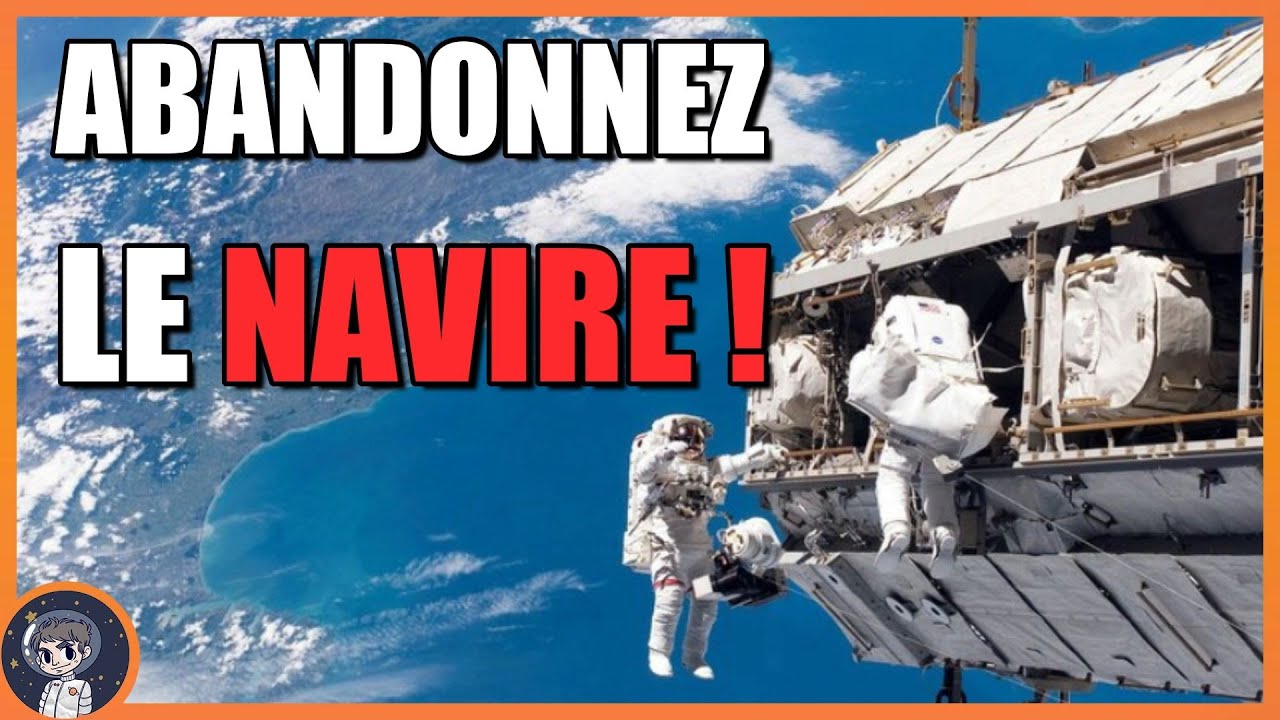
L'ISS est en train d'être ABANDONNÉE ! - Le Journal de l'Espace #145 - Actualité spatiale
Keywords
Summary
178 words
Critical Evaluation
Value of the Information & Strength of the Argument
The video provides substantial value by summarizing and contextualizing recent space news, offering background information and analysis. The argumentation is solid, as it presents facts and official statements from space agencies, and explains technical details clearly. The host maintains a balanced perspective, acknowledging uncertainties and potential delays. The coverage of the ISS situation is particularly thorough, explaining the geopolitical context and the technical challenges. The video also demonstrates good journalistic practice by noting when information is not yet official or confirmed.
Scientific Rigor, Source Quality, Title Accuracy
The video demonstrates scientific rigor by citing official sources such as NASA, Roscosmos, and CNSA, and by referencing specific reports and announcements. The quality of sources is good, with a clear distinction between confirmed facts and speculation. The title accurately reflects the main topic, and the content matches the promise. The video also includes credits for images and animations, and lists general sources in the description. The channel has a reputation for reliable space news coverage.
172 words
Title / Content Match
The title accurately reflects the main topic (Russia's announcement to leave the ISS) and the video delivers on this promise, covering the news and related context.
Quality & Reliability
8/10
The video provides a well-structured review of recent space news, citing official announcements from NASA, Roscosmos, and CNSA. The information is accurate as of the publication date, with clear explanations of technical details. The channel has a good track record of reliability, and the video includes multiple sources and credits.
Chapters
- Introduction et annonces
- La Russie QUITTE l'ISS !
- Les remplaçantes de l'ISS en RETARD
- Succès total pour la Chine avec l'envoi du module WENGTIAN vers la CSS
- La NASA est prête et donne une date de lancement du SLS
- Des tests IMPRESSIONNANTS pour le booster du SLS
- ça se complique pour VIPER sur la LUNE
- Première EVA de Samantha Cristoforetti, astronaute Européenne!
Cited Sources
- Le Journal de l'Espace - Blog — Official blog of the channel, providing additional articles and information.
- Forum de la conquête spatiale — French space exploration forum, used as a general source for community discussions and information.
- LabPadre YouTube Channel — YouTube channel providing live streams and updates on space activities, used as a source for visuals and information.
- NASA Spaceflight YouTube Channel — YouTube channel covering spaceflight news and launches, used as a source for visuals and information.
Concurring Sources
- NASA - International Space Station — Official NASA page on the ISS, providing updates and information consistent with the video's content.
- Roscosmos official website — Official Russian space agency website, where announcements about ISS withdrawal would be published.
Dissenting Sources
- NASA statement on Russia's ISS withdrawal — NASA has stated it has not received official notification of Russia's withdrawal, which contrasts with the video's presentation of the announcement as definitive.
External References
Contribution & Novelties
The video provides a comprehensive and up-to-date summary of space news, with a focus on the geopolitical implications of Russia’s ISS withdrawal and the challenges of transitioning to commercial space stations. It offers context and analysis that goes beyond simple news reporting, helping viewers understand the complexities of space policy and technology.
Pour aller plus loin :
- International Space Station — Overview of the ISS, its history, and current status.
- Artemis program — NASA’s lunar exploration program, including the SLS and Orion.
- Tiangong space station — China’s modular space station, its modules, and assembly.
- VIPER (rover) — NASA’s lunar rover mission to search for water ice.
- Commercial space stations — Overview of private space station projects.
116 words
Radar Profile
The radar profile shows high scores in information quantity, quality, and reliability, with a slightly lower technical level, indicating a well-balanced and accessible presentation of complex space news.
💬 Très positif : Sur les 30 commentaires analysés, l'ensemble exprime une gratitude et une appréciation pour la qualité et la clarté des informations, avec des encouragements pour l'équipe.