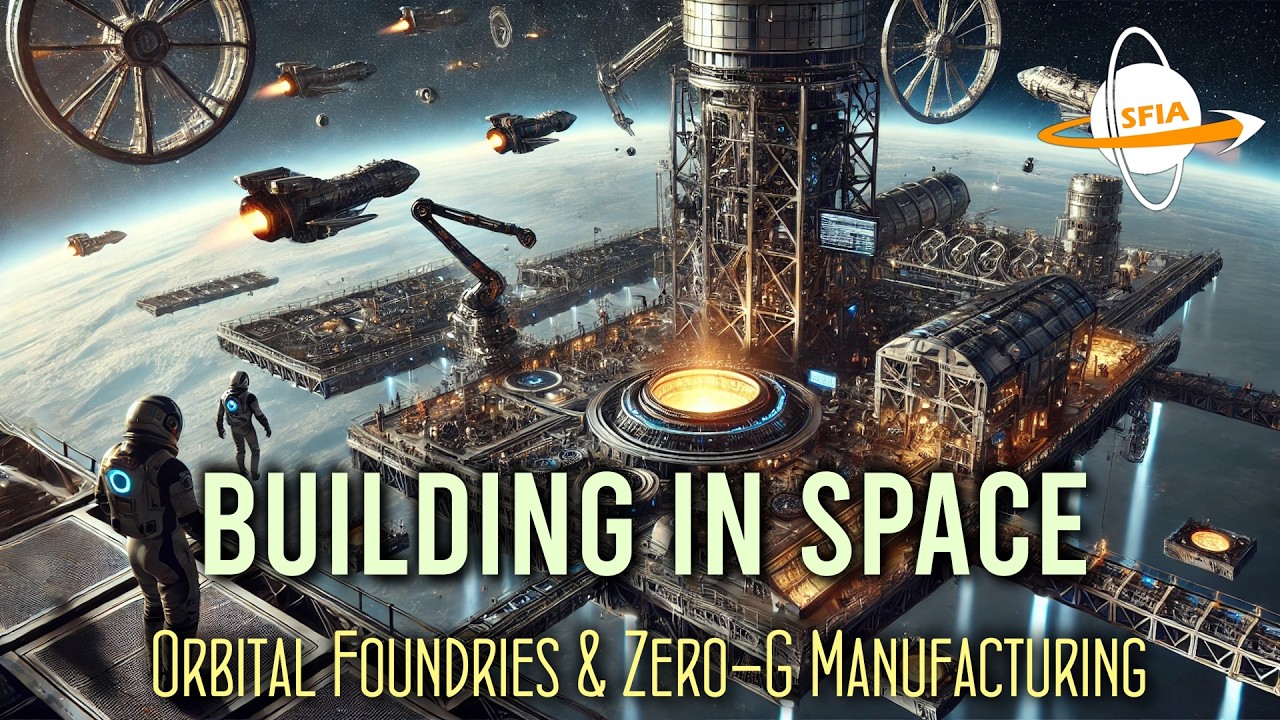
Orbital Foundries & Zero G Manufacturing - Building in Space
Keywords
Summary
192 words
Critical Evaluation
Value of the Information & Strength of the Argument
The video provides substantial value by systematically breaking down the technical and economic rationale for space manufacturing. It effectively argues that the high cost of launch is offset by the unique properties of microgravity and vacuum, which enable the production of high-value, low-mass goods. The argumentation is solid, building from current experiments to plausible near-term applications and then to more speculative long-term scenarios, always grounding each step in physical principles and economic logic. The use of concrete examples, such as ZBLAN fibers and bioprinted organs, strengthens the case. The video also acknowledges challenges, such as re-entry and the need for cost-effectiveness, which adds to its credibility.
Scientific Rigor, Source Quality, Title Accuracy
The video demonstrates strong scientific rigor by referencing real technologies and concepts, such as ZBLAN fibers, in-situ resource utilization, and O’Neill cylinders. It does not cite specific academic papers but relies on established knowledge in materials science, aerospace engineering, and space policy. The title accurately reflects the content, which is a comprehensive overview of orbital manufacturing. The video is well-structured with clear chapters, and the creator’s reputation for thoughtful, well-researched content supports its reliability. The description provides links to Patreon, Subscribestar, and social media, but no direct scientific sources.
210 words
Title / Content Match
The title accurately reflects the content, which focuses on the development and potential of orbital foundries and zero-gravity manufacturing.
Quality & Reliability
8/10
The video is a well-structured, scientifically grounded exploration of space manufacturing, drawing on established concepts (e.g., ZBLAN fibers, ISRU) and plausible future scenarios. While it is speculative in nature, it consistently references real technologies and avoids unsubstantiated claims. The creator has a strong track record of rigorous science communication.
Chapters
Cited Sources
- Epidemic Sound — Music source credited in the video description.
- Reddit - r/IsaacArthur — Community discussion forum for the channel.
- Subscribestar - Isaac Arthur — Alternative support platform for the creator.
Concurring Sources
- NASA - In-Situ Resource Utilization — NASA's official page on ISRU, supporting the video's discussion of using space resources.
- Made In Space - Archinaut — Company mentioned in the video for in-space manufacturing.
Contribution & Novelties
The video’s original contribution lies in its comprehensive synthesis of current research and future possibilities in space manufacturing, presented in an accessible yet technically informed manner. It effectively connects near-term experiments to long-term megastructure concepts, providing a coherent roadmap for the industrialization of space.
Pour aller plus loin :
- In-situ resource utilization — Core concept for sourcing materials in space.
- ZBLAN — The fluoride glass fiber discussed in the video.
- O’Neill cylinder — A key habitat design for long-term space settlement.
81 words
Radar Profile
The radar profile shows high scores in information quantity, quality, and technical level, with a slightly lower but still strong reliability score. This indicates a content-rich, well-explained video that is technically sound, though its speculative nature prevents a perfect reliability rating.
💬 Très positif. Sur les 30 commentaires analysés, l'écrasante majorité exprime un enthousiasme marqué pour le contenu, avec des éloges sur la qualité et l'inspiration, et plusieurs partagent des expériences professionnelles pertinentes.