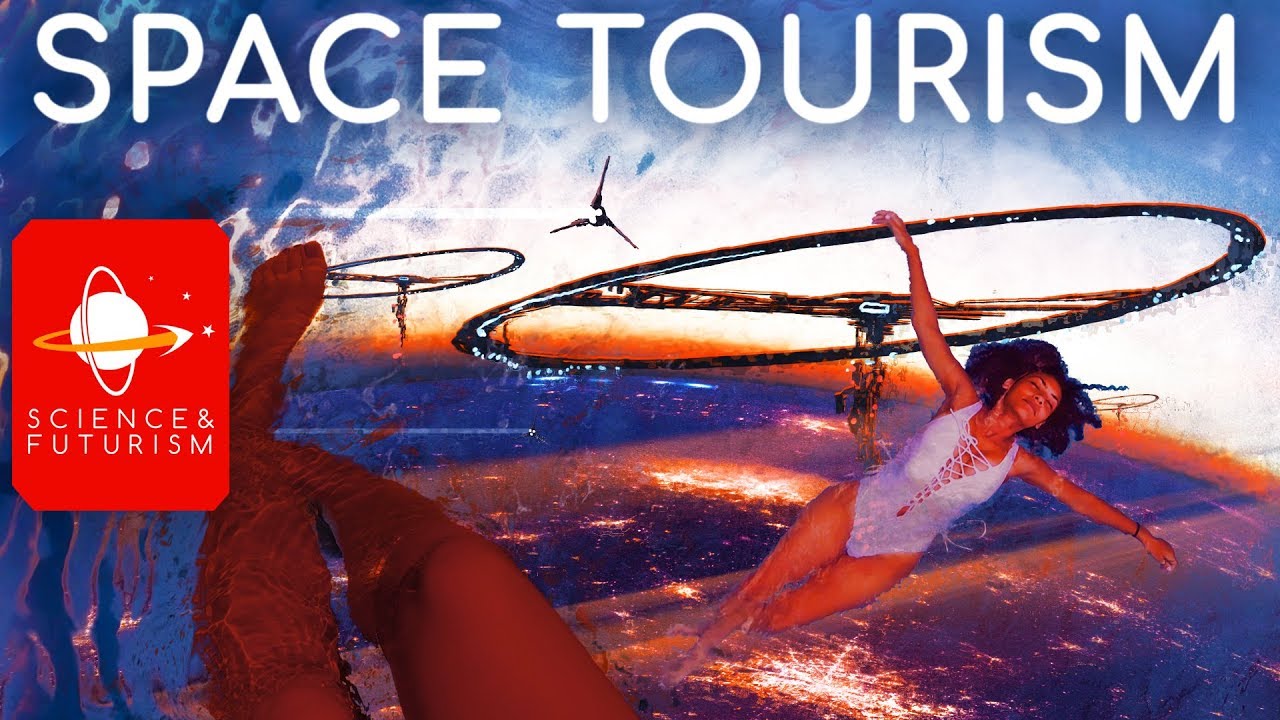
Space Tourism
Keywords
Summary
182 words
Critical Evaluation
Value of the Information & Strength of the Argument
The video provides a rich and imaginative yet scientifically grounded exploration of space tourism. Arthur’s argumentation is solid, as he systematically considers the physical constraints (e.g., travel times, gravity, life support) and economic factors that will shape the industry. He effectively uses analogies to terrestrial tourism (cruise ships, national parks) to make concepts accessible. The speculative elements are clearly flagged as such, and he often cites real astronomical features and engineering concepts, lending credibility. The episode is not merely a list of ideas but a coherent narrative that connects near-term possibilities with long-term visions, supported by logical reasoning about technological development and human behavior.
Scientific Rigor, Source Quality, Title Accuracy
The video demonstrates strong scientific rigor, with Arthur referencing real astronomical features (e.g., Valles Marineris, Olympus Mons, Titan’s atmosphere) and engineering concepts (e.g., O’Neill cylinders, rotating habitats). He also mentions specific sources, such as the Gateway Foundation’s spaceport design and the works of Ben Bova, which are relevant to the topic. The title accurately reflects the content, which is a comprehensive overview of space tourism. The video includes a brief sponsorship segment for Audible, which is clearly separated from the main content. The description provides links to related resources, including the channel’s website, social media, and the episode’s audio versions, but these are not scientific sources. Overall, the content is well-researched and appropriately sourced for a science communication piece.
238 words
Title / Content Match
The title accurately reflects the content, which comprehensively covers the concept, near-term prospects, and far-future possibilities of space tourism.
Quality & Reliability
8/10
The video is a well-structured, speculative but scientifically grounded exploration of space tourism, drawing on known physics, astronomy, and engineering concepts. Isaac Arthur consistently distinguishes between current technology, near-term projections, and far-future possibilities, and he cites relevant sources and concepts. The content is internally consistent and aligns with established scientific knowledge, though it is inherently speculative in its long-term projections.
Key Moments
Markers derived by PSI from the transcript: the creator did not define chapters.
- Introduction: Space is awesome, and tourism will be a reason to go.
- Low Earth orbit tourism: space stations, zero-gravity, and sunrise cafes.
- Natural wonders: sunsets on Mars, Venus, and Titan.
- Canyons and mountains: Valles Marineris, Olympus Mons, and more.
- Historical sites and preservation: Apollo landing sites and property rights.
- Travel times and cruise ship model for interplanetary tourism.
- Asteroid belt tourism and circuit caravans.
- Artificial wonders: O'Neill cylinders, shellworlds, and Topopolis.
- Future of tourism: high-speed travel, energy beaming, and billions of tourists.
- Conclusion: Space tourism as the last stage of development, and book recommendation.
Cited Sources
- Gateway Foundation — Referenced for the design of rotating space stations with a zero-g hub.
- Ben Bova's Grand Tour series — Recommended as a science fiction series about solar system colonization, and available on Audible.
- Spacehabs (Bryan Versteeg) — Graphics for space habitats.
- Isaac Arthur's Website — Official website for the channel and additional resources.
Concurring Sources
- Gateway Foundation — Their designs for space stations align with the video's description of rotating habitats.
- NASA - Space Tourism — General information on space exploration and tourism initiatives.
External References
Contribution & Novelties
This episode provides a comprehensive and imaginative overview of space tourism, synthesizing known astronomical facts with plausible engineering concepts. It goes beyond simple speculation by considering economic, legal, and social factors, and it offers a coherent vision of how tourism might evolve from orbital hotels to interplanetary cruises and eventually to megastructures. The discussion of preservation and property rights in space is particularly insightful, as it addresses often-overlooked challenges.
Pour aller plus loin :
- O’Neill cylinder — A classic concept for space habitats, directly relevant to the artificial worlds discussed.
- Valles Marineris — The real canyon on Mars, mentioned as a tourist destination.
- Space tourism — Overview of current and near-term space tourism efforts.
- Topopolis — A hypothetical megastructure, relevant to the discussion of future habitats.
126 words
Radar Profile
The radar profile shows high scores in quantity of information and technical level, indicating a content-dense and moderately technical video. The quality and reliability scores are also high, reflecting the scientific rigor and clear communication. The overall shape suggests a well-balanced and informative piece, with a slight emphasis on breadth of information over depth in any single area.
💬 Très positif. Sur les 30 commentaires analysés, l'enthousiasme est dominant, avec des éloges pour la qualité du contenu, des discussions sur les idées présentées, et des références à d'autres œuvres de science-fiction, sans critiques négatives notables.