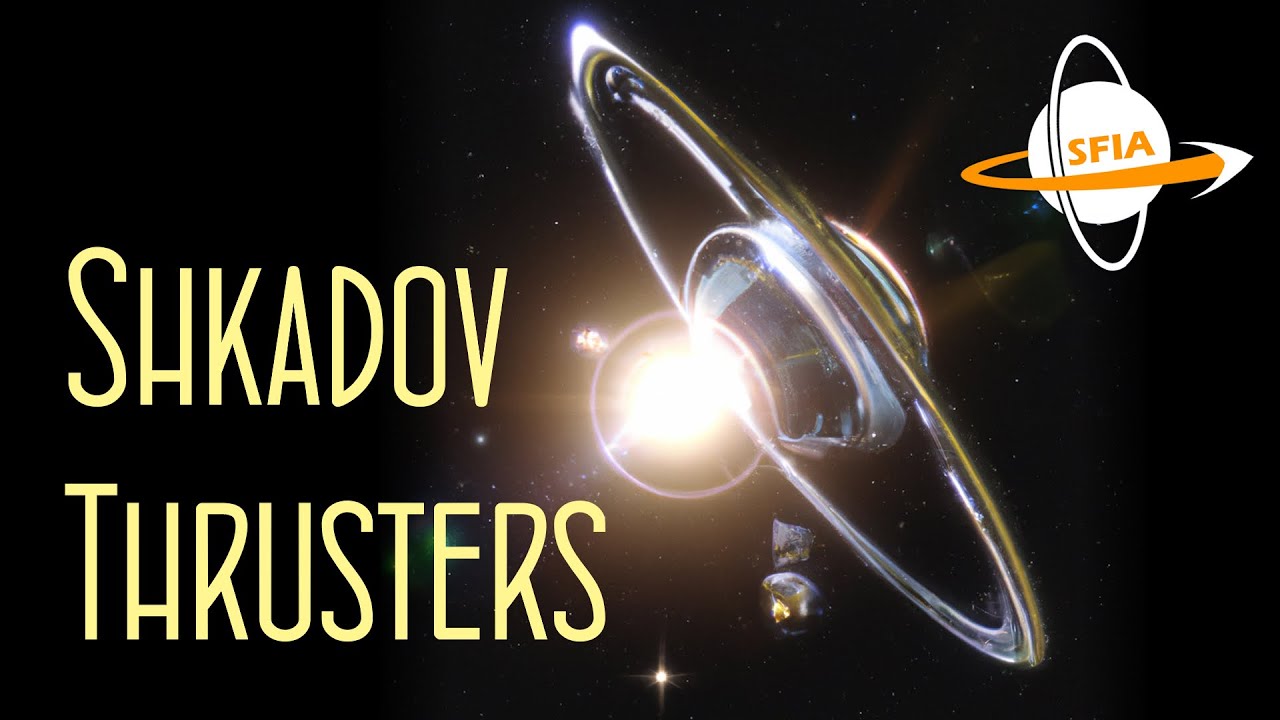
Shkadov Thrusters
Keywords
Summary
184 words
Critical Evaluation
Value of the Information & Strength of the Argument
The video provides a solid introduction to the Shkadov Thruster, explaining the underlying physics in an accessible manner. Arthur’s argumentation is logical and well-structured, starting from basic principles (photon momentum, radiation pressure) and building up to the concept’s applications and limitations. He effectively uses calculations to illustrate the timescales and accelerations involved, which strengthens the credibility of his explanations. The discussion of moving supernova candidates rather than one’s own star is a particularly insightful point, showing a nuanced understanding of the concept’s practical use. The video is valuable for its clear exposition of a niche but fascinating topic in astroengineering.
Scientific Rigor, Source Quality, Title Accuracy
The video is scientifically rigorous in its use of physics, but it does not cite specific sources or papers. Isaac Arthur is a well-known science communicator with a reputation for accuracy, and the content aligns with established concepts in the field. The title accurately reflects the content, and the video stays on topic. The description provides links to the channel’s website and social media, but no direct references to academic papers. The video’s strength lies in its clear explanation rather than in citing external sources.
200 words
Title / Content Match
The title accurately reflects the content, which focuses on the Shkadov Thruster and its applications.
Quality & Reliability
8/10
The video presents a clear, technically accurate explanation of the Shkadov Thruster concept, grounded in established physics (photon momentum, radiation pressure, orbital mechanics). Isaac Arthur is known for rigorous science communication, and the content aligns with current scientific understanding. However, it is a popular science presentation without formal citations, and some extrapolations (e.g., moving stars to avoid supernovae) are speculative.
Key Moments
Markers derived by PSI from the transcript: the creator did not define chapters.
- Introduction to the Shkadov Thruster and its place in the megastructures series.
- Explanation of Dyson swarms and the concept of statites.
- Derivation of thrust from photon momentum and the power needed for 1 gee acceleration.
- Discussion of using mirrors to double thrust and the potential of laser sails.
- Introduction of the Shkadov Thruster concept: a hemispherical mirror to move a star.
- Calculations of the sun's acceleration and the timescales involved in moving it.
- Comparison with more massive stars and the idea of moving supernova candidates.
- Conclusion and channel update, including a poll for future topics.
Cited Sources
- Isaac Arthur's Website — Official website of the channel, providing additional resources and information.
- Nebula — Streaming platform where Isaac Arthur's videos are available, often with additional content.
- Reddit - r/IsaacArthur — Community forum for discussions about the channel's content.
- Subscribestar — Platform for supporting the channel financially.
Concurring Sources
- Shkadov Thruster - Wikipedia — Confirms the basic concept and physics of the Shkadov Thruster.
- Dyson Sphere - Wikipedia — Provides context on Dyson spheres and swarms, aligning with the video's discussion.
Contribution & Novelties
The video provides a clear and accessible explanation of the Shkadov Thruster, a concept that is often mentioned but rarely explained in detail. It offers a quantitative analysis of the acceleration and timescales involved, which helps viewers understand the feasibility and limitations of such a megastructure. The discussion of moving supernova candidates rather than one’s own star is a novel perspective that adds depth to the topic. The video also introduces the term ’lagites’ for a hypothetical class of objects, which could be a contribution to the field’s vocabulary.
Pour aller plus loin :
- Shkadov Thruster - Wikipedia — Provides a concise overview of the concept and its history.
- Dyson Sphere - Wikipedia — Background on the broader concept of solar englobement.
- Statite - Wikipedia — Explains the concept of static satellites held by radiation pressure.
- Radiation Pressure - Wikipedia — Fundamental physics behind the thruster’s operation.
147 words
Radar Profile
The radar profile shows high scores in information quantity, quality, technical level, and reliability, indicating a well-rounded and informative video. The technical level is slightly lower than the other scores, reflecting its accessible presentation, but overall it is a strong educational resource.
💬 Très positif. Sur les 30 commentaires analysés, les spectateurs expriment une grande appréciation pour la clarté et la profondeur des explications, certains demandant même plus de contenu long format.