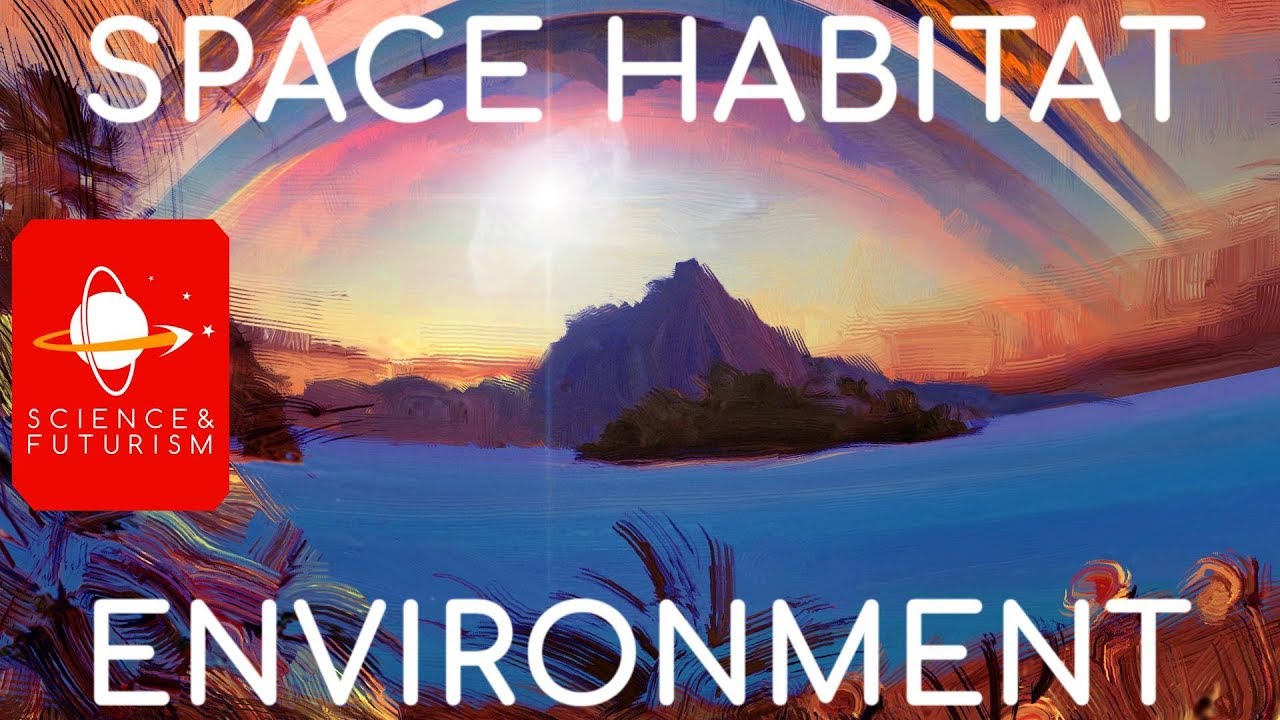
Upward Bound: The Environments of Space Habitats
Keywords
Summary
195 words
Critical Evaluation
Value of the Information & Strength of the Argument
The video provides a wealth of information, systematically examining the environmental factors that would shape space habitats. It goes beyond simple descriptions to analyze the physical and ecological implications of different habitat designs, such as the variation in air pressure and gravity with altitude, and the resulting weather patterns. The argumentation is logical and well-structured, building from basic principles to more complex scenarios. The presenter acknowledges uncertainties and presents multiple possibilities, which strengthens the credibility of the analysis. The use of concrete examples, such as the Kaplana One design and the concept of a ’trolley sun’, helps to make the abstract concepts more tangible.
Scientific Rigor, Source Quality, Title Accuracy
The video demonstrates a high level of scientific rigor, with careful reasoning based on established physics and ecology. While it does not cite specific academic papers, it references well-known concepts and designs (e.g., O’Neill cylinders, McKendree cylinders) and mentions the work of artists and thinkers like Bryan Versteeg. The description provides links to related resources, including the artist’s website and the Event Horizon show, which adds credibility. The title accurately reflects the content, which is a focused exploration of the environments of space habitats. The video does not overstate its claims and clearly distinguishes between established science and speculative future possibilities.
220 words
Title / Content Match
The title accurately reflects the content, which focuses on the environmental and ecological aspects of space habitats.
Quality & Reliability
8/10
The video presents a well-structured, scientifically grounded exploration of environmental conditions in rotating space habitats, drawing on established concepts in physics, ecology, and engineering. The reasoning is logical and consistent, with appropriate caveats about uncertainties. The content is speculative but clearly framed as such, and the presenter demonstrates a strong grasp of the relevant scientific principles.
Key Moments
Markers derived by PSI from the transcript: the creator did not define chapters.
- Introduction to spin gravity and the concept of rotating habitats.
- Discussion of air pressure and weather in enclosed drums, including the role of Coriolis forces.
- Examination of habitat designs, including end caps, mountains, and floating landmasses.
- Analysis of lighting options, including central light bars and trolley suns, and their effects on ecosystems.
- Consideration of ecosystem maintenance, including bioengineered organisms and artificial intervention.
- Discussion of long-term evolution and the potential for unique species in isolated habitats.
- Exploration of organisms living on the exterior of habitats and the potential for self-repairing structures.
Cited Sources
- Bryan Versteeg's art — Artist's website showcasing concept art for space habitats, including the Kaplana One design mentioned in the video.
- Event Horizon Show — Interview with John Michael Godier, referenced in the video description.
- Isaac Arthur's website — Official website of the channel, providing additional resources and information.
- Beyond Nerva — Blog by Stuart Graham, one of the writers for the episode.
Concurring Sources
- O'Neill cylinder — The video discusses O'Neill cylinders as a type of rotating habitat, and the Wikipedia article provides background information on the concept.
- McKendree cylinder — The video mentions McKendree cylinders as a larger variant of rotating habitats, and the Wikipedia article offers details on the design.
External References
Contribution & Novelties
The video provides a comprehensive and original synthesis of how environmental and ecological principles would apply to rotating space habitats, going beyond typical discussions of habitat design to consider the dynamic interactions of weather, ecosystems, and human intervention. It introduces novel concepts such as the ’trolley sun’ and the potential for bioengineered organisms to maintain the habitat, offering fresh perspectives on long-term space colonization.
Pour aller plus loin :
- O’Neill cylinder — A classic concept for a rotating space habitat, providing a foundation for understanding the designs discussed.
- Coriolis effect — The physical phenomenon that would influence weather patterns in rotating habitats.
- Biosphere 2 — A real-world experiment in closed ecological systems, relevant to the challenges of maintaining ecosystems in space habitats.
122 words
Radar Profile
The radar profile shows high scores in information quantity and quality, reflecting the video's comprehensive and well-structured content. The technical level is also high, indicating a sophisticated audience. The overall reliability is strong, with only minor caveats about the speculative nature of the topic.
💬 Très positif. Les commentaires expriment un enthousiasme marqué pour le contenu, avec des discussions approfondies sur les concepts présentés et des remerciements pour la qualité de l'épisode.