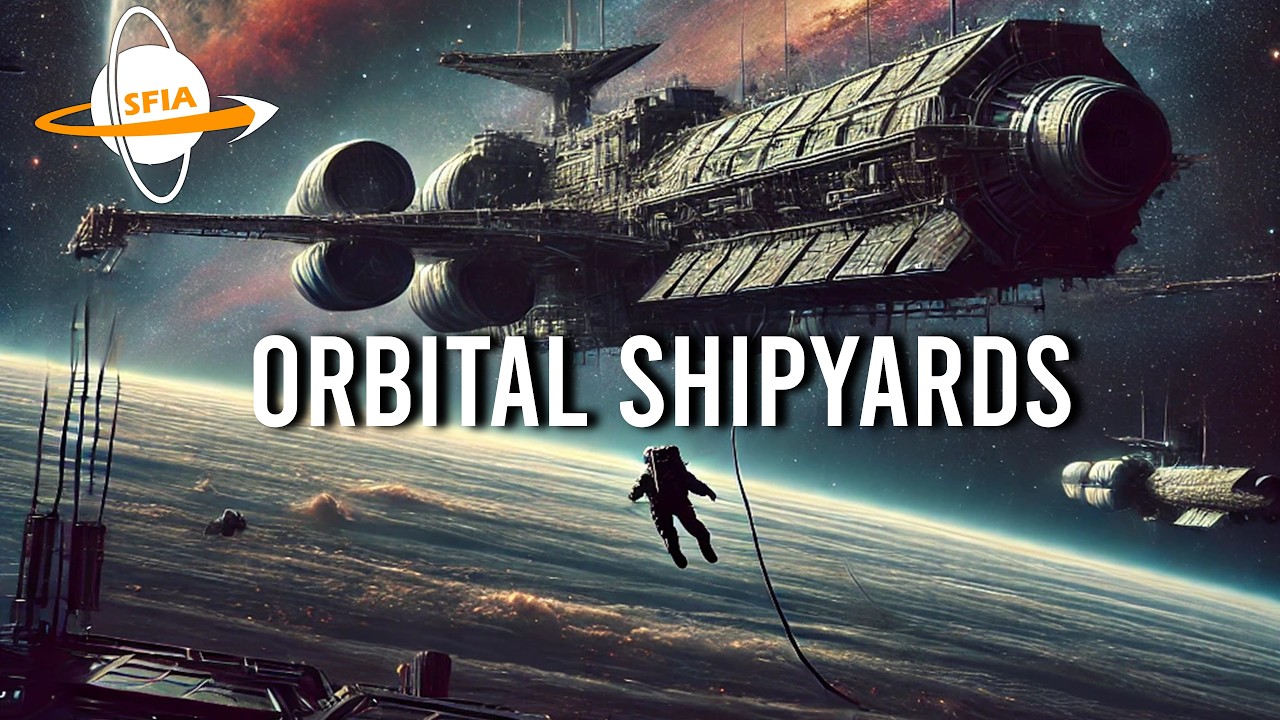
Orbital Shipyards - Building Fleets in Space
Keywords
Summary
177 words
Critical Evaluation
Value of the Information & Strength of the Argument
The video provides substantial value by systematically breaking down the technical, logistical, and economic aspects of orbital shipyards. It presents a coherent argument for why building in space is superior to launching from Earth, supported by examples of existing technology and plausible future concepts. The discussion of different shipyard models (e.g., high-tech vs. rugged) and the detailed examination of infrastructure needs (power, materials, transport) demonstrate a thorough and well-structured argumentation. The inclusion of real-world projects like the ISS and Lunar Gateway grounds the speculation in current reality, enhancing its credibility.
Scientific Rigor, Source Quality, Title Accuracy
The video demonstrates scientific rigor by referencing real space programs (ISS, Artemis, Lunar Gateway) and established concepts like ISRU and Lagrange points. While it does not cite specific academic papers, it aligns with known engineering principles and the broader scientific consensus on space development. The title accurately reflects the content, which is a focused exploration of orbital shipyards. The video’s internal logic is sound, and it avoids unsupported claims by clearly distinguishing between current capabilities and future possibilities.
183 words
Title / Content Match
The title accurately reflects the content, which focuses on the concept, infrastructure, and future of building spacecraft in orbit.
Quality & Reliability
8/10
The video is a well-researched speculative analysis grounded in current space technology and engineering principles. It clearly distinguishes between existing projects (ISS, Lunar Gateway) and future concepts, and consistently references the need for ISRU and realistic logistics. The content is internally consistent and aligns with known scientific and engineering constraints.
Chapters
- Intro
- Why Build in Orbit?
- The Gravity Well Problem
- Material Sourcing – The Importance of ISRU
- Early Orbital Shipyards – Existing & Near-Future Projects
- Lessons from Space Stations & Prototypes
- Port George & Linus Scrapyard – Revisiting Fictional Shipyards
- Infrastructure & Logistics of Orbital Shipyards
- Constructing Different Types of Ships
- Challenges of Large-Scale Shipbuilding
- Maintenance, Repairs, and Refits – Sustaining a Spacefaring Fleet
- Salvage and Recycling
- The Future of Orbital Shipyards – Expanding Beyond Earth
- The Rise of Megastructure Shipyards
- Privatization and the Spacefaring Economy
- Shipyards as Strategic Military and Political Assets
- The Role of AI, Automation, and Post-Human Workforces
Cited Sources
- Nebula - Fishbowl Starships — Referenced as an exclusive episode related to the topic of shipbuilding and radiation shielding.
- Isaac Arthur Website — Official website for the channel, providing additional resources and information.
- Nebula Subscription — Platform for early and ad-free access to episodes, mentioned in the video.
- Nebula Lifetime Membership — Mentioned as a way to support the channel and access exclusive content.
- Nebula Gift — Mentioned as a way to gift a subscription to others.
- Reddit - r/IsaacArthur — Community forum for discussion of the channel's content.
- Subscribestar - Isaac Arthur — Alternative platform for supporting the channel.
- Epidemic Sound — Music source credited in the video description.
Concurring Sources
- NASA - Lunar Gateway — Mentioned as a near-future project that will be assembled in orbit, supporting the concept of orbital construction.
- NASA - ISS — Cited as an example of modular assembly in space, providing lessons for future shipyards.
Contribution & Novelties
The video provides a comprehensive and accessible synthesis of the concept of orbital shipyards, integrating technical, economic, and strategic perspectives. It goes beyond simple speculation by grounding the discussion in current space programs and proposing realistic evolutionary paths. The revisiting of fictional concepts (Port George, Linus Scrapyard) adds a creative dimension that helps illustrate different potential models. The emphasis on the full lifecycle of ships (construction, maintenance, salvage) is a valuable addition to the typical focus on just building.
Pour aller plus loin :
- In-situ resource utilization — Directly relevant to the core concept of sourcing materials in space.
- Lagrange point — Discussed as potential locations for shipyards.
- Space elevator — Mentioned as a future alternative for material transport.
- Mass driver — Proposed as a method for launching materials from the Moon or asteroids.
- Skyhook (structure) — Another concept for efficient material transfer in space.
145 words
Radar Profile
The radar profile shows high scores in information quantity and quality, with a slightly lower score in technical depth, reflecting the video's broad but accessible approach. The fiabilite is high, indicating a trustworthy and well-reasoned presentation.
💬 Très positif. Sur les 30 commentaires analysés, la grande majorité exprime un enthousiasme marqué pour le nouveau format vidéo, la qualité du contenu et la valeur éducative de l'épisode, avec quelques commentaires constructifs sur les préférences de style.