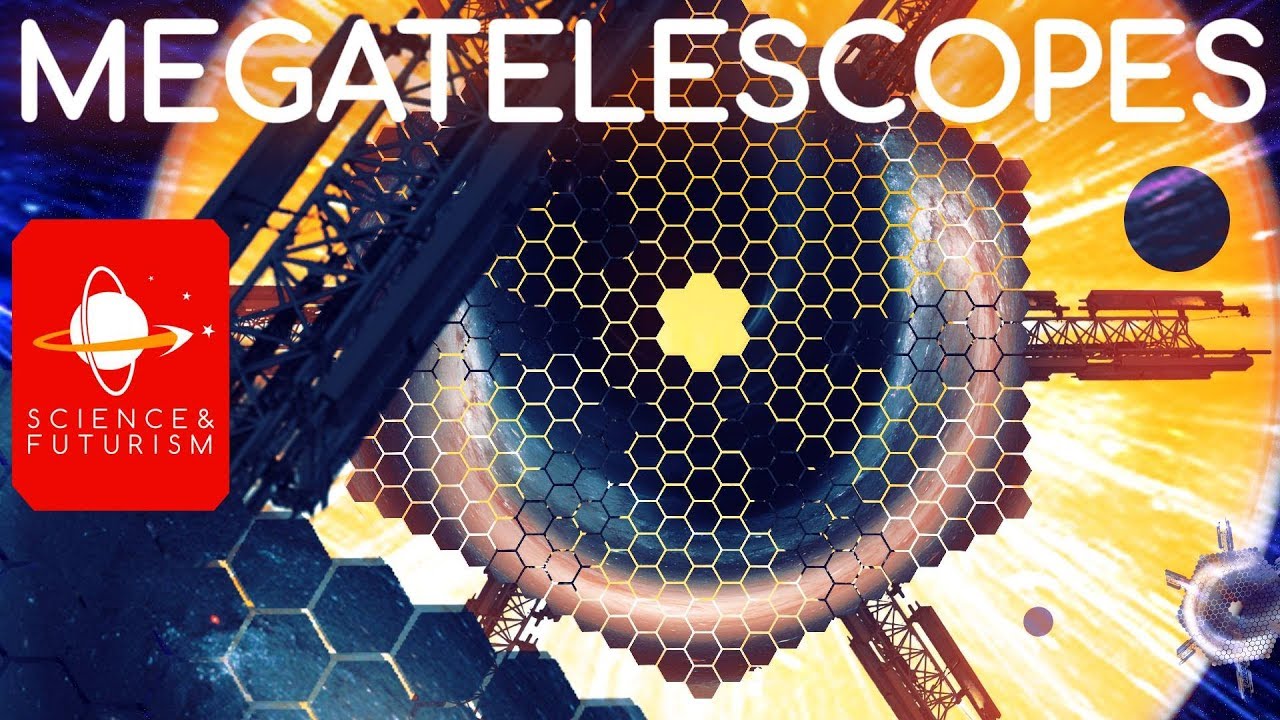
Megatelescopes
Keywords
Summary
157 words
Critical Evaluation
Value of the Information & Strength of the Argument
The video offers substantial value by clearly explaining complex astronomical concepts in an accessible manner. It effectively argues that building megatelescopes is not only possible but a natural progression of current technology. The argumentation is solid, using concrete examples like LIGO and LISA to illustrate the principles of interferometry. The speculative parts are clearly framed as possibilities, not certainties, which maintains scientific credibility. The video also does a good job of connecting historical developments to future possibilities, providing a coherent narrative.
Scientific Rigor, Source Quality, Title Accuracy
The video demonstrates strong scientific rigor, with accurate explanations of telescope designs and interferometry. It references real instruments and projects (LIGO, LISA, LZT) and mentions the work of historical figures like Newton and Huygens. The sources cited in the description are mostly links to the channel’s own website and social media, as well as music credits, but the content itself is well-researched. The title accurately reflects the content, which is a comprehensive look at the concept of megatelescopes. The video includes a sponsor segment for Brilliant, which is clearly indicated and does not detract from the scientific content.
194 words
Title / Content Match
The title 'Megatelescopes' accurately reflects the content, which focuses on the concept of building extremely large telescopes and the technologies that could enable them.
Quality & Reliability
8/10
The video provides a well-structured overview of telescope designs, from historical refractors to future megastructures, with accurate explanations of key concepts like adaptive optics and interferometry. It cites specific instruments (LIGO, LISA, LZT) and includes a sponsor segment, but the speculative future scenarios are clearly presented as possibilities rather than established facts.
Key Moments
Markers derived by PSI from the transcript: the creator did not define chapters.
- Introduction to the history of telescopes and the concept of megatelescopes.
- Discussion of refracting telescopes and the problem of chromatic aberration.
- Explanation of reflecting telescopes and the Cassegrain design.
- Introduction to liquid mirror telescopes and their potential on the Moon.
- Explanation of active and adaptive optics.
- Introduction to interferometry and its use in radio astronomy.
- Detailed explanation of LIGO and gravitational wave detection.
- Discussion of LISA and space-based interferometry.
- The scale needed to image exoplanets and the concept of hyper telescopes.
- Future possibilities: planet-sized telescopes and gravitational lensing.
Cited Sources
- Isaac Arthur Website — Official website of the channel, providing additional resources and information.
- Brilliant (Sponsor) — Sponsor of the video, offering educational content in science and math.
- Nebula — Streaming platform where Isaac Arthur's content is available.
- Soundcloud - Megatelescopes — Audio-only version of the episode.
- Soundcloud - Narration-only — Narration-only version of the episode.
- Lombus Music — Music used in the video.
- Stellardrone Bandcamp — Music used in the video.
- Jakub Grygier Artstation — Cover artist for the video.
- Sergio Botero Artstation — Graphics team member.
- Markus Junnikkala — Music used in the video.
- Reddit - r/IsaacArthur — Community discussion forum for the channel.
- Subscribestar — Support platform for the channel.
Concurring Sources
- LIGO Scientific Collaboration — Official LIGO website, confirming the existence and operation of the detectors.
- NASA Exoplanet Exploration — NASA's page on exoplanets, which aligns with the video's discussion of imaging exoplanets.
Dissenting Sources
- No discordant sources found — The video's content is consistent with established scientific knowledge and no conflicting sources were identified.
Contribution & Novelties
The video provides a comprehensive and accessible overview of the future of telescope technology, synthesizing current concepts like interferometry and adaptive optics with speculative megastructures. It offers a unique perspective by connecting historical developments to future possibilities, making it valuable for both enthusiasts and those new to the topic.
Pour aller plus loin :
- Interferometry — Explains the general principle of wave interference and its applications in astronomy.
- LIGO — Details the Laser Interferometer Gravitational-Wave Observatory and its discoveries.
- LISA — Information on the planned space-based gravitational wave detector.
- Adaptive Optics — Overview of the technology used to correct atmospheric distortion in telescopes.
- Liquid-mirror telescope — Discusses the concept of using rotating liquid as a mirror, as mentioned in the video.
121 words
Radar Profile
The radar profile shows high scores in quantity and quality of information, with a slightly lower but still strong score in technical level. This indicates a video that is both informative and accessible, with a good balance between depth and clarity.
💬 Très positif. Sur les 30 commentaires analysés, les spectateurs expriment un fort enthousiasme pour le contenu, saluant la qualité de la production et la profondeur des sujets abordés, certains mentionnant l'utilisation des vidéos dans un cadre éducatif.