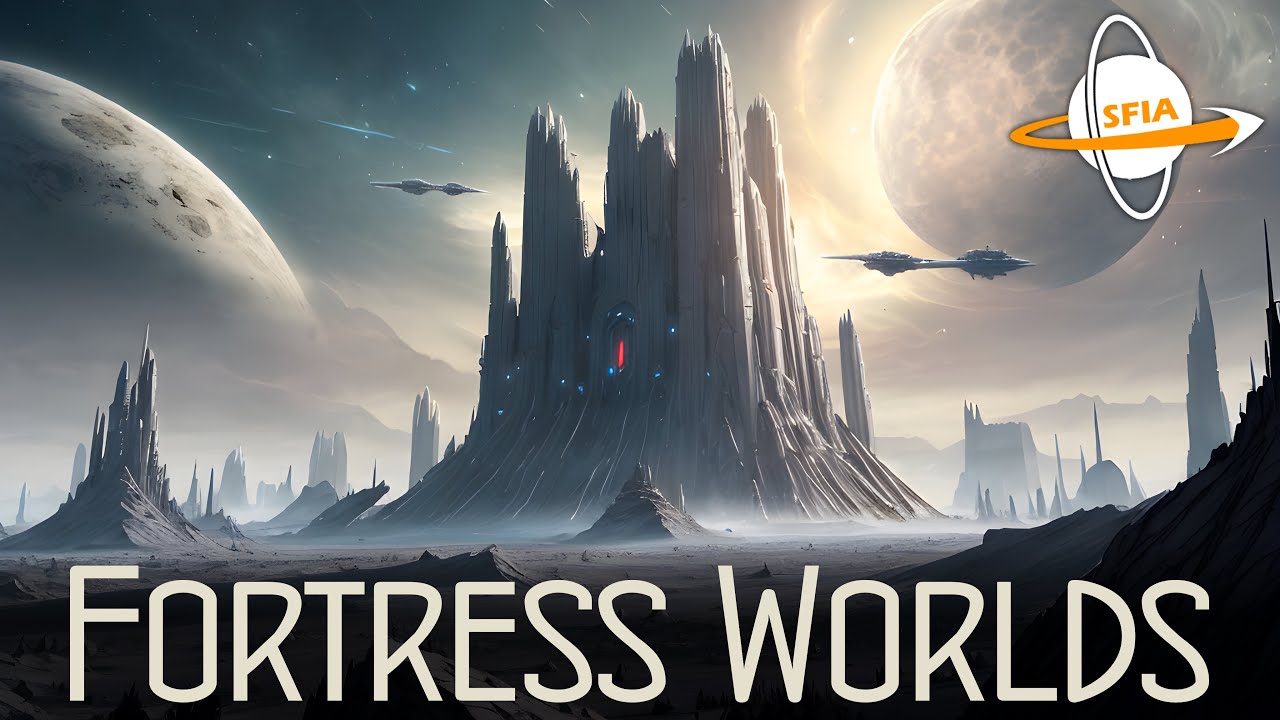
Fortress Worlds
Keywords
Summary
165 words
Critical Evaluation
Value of the Information & Strength of the Argument
The video provides substantial value by deconstructing common sci-fi assumptions and offering a more realistic, physics-based perspective on planetary warfare. The argumentation is solid, using logical reasoning, historical analogies, and consideration of technological possibilities. Arthur effectively challenges the notion of orbital superiority and highlights the defensive advantages of a planet. He also explores the social and psychological aspects of long-term sieges, adding depth to the analysis. The arguments are well-structured and build upon each other, making a compelling case for the plausibility of fortress worlds.
Scientific Rigor, Source Quality, Title Accuracy
The video demonstrates scientific rigor by grounding its speculations in known physics and engineering principles. While it does not cite specific academic sources, it references historical events (World Wars, Maginot Line) and fictional works (Warhammer 40k, Evangelion) to illustrate points. The title accurately reflects the content. The video is part of a series and maintains a consistent quality of research and presentation. The lack of formal citations is typical for the genre, but the reasoning is transparent and logical.
179 words
Title / Content Match
The title accurately reflects the content, which explores the concept of fortifying entire planets in a future interstellar context.
Quality & Reliability
8/10
The video is a well-researched speculative analysis grounded in physics, engineering, and historical military examples. Isaac Arthur is a known science communicator with a consistent track record of rigorous content. The arguments are logical and consider multiple perspectives, though they are inherently speculative and not peer-reviewed.
Key Moments
Markers derived by PSI from the transcript: the creator did not define chapters.
- Introduction to the concept of fortress worlds and critique of sci-fi planetary invasions.
- Discussion on the fragility of spaceships vs. planets and the role of orbital infrastructure.
- Analysis of historical fortifications like the Maginot Line and their relevance to planetary defense.
- Exploration of underground bunkers, life support, and food storage for long sieges.
- Examination of automated defenses, AI, and remote-controlled warfare.
- Discussion of fortress worlds in a Dyson swarm civilization and the role of space habitats.
- Speculative narrative about a multi-generational siege and the extreme measures of defense.
Cited Sources
- Epidemic Sound — Music used in the video.
- Isaac Arthur Website — Official website of the channel.
- Nebula — Streaming platform where the video is also available.
- Spintronics — Sponsor mentioned in the video description.
- Reddit Community — Community discussion forum.
- Subscribestar — Support platform for the channel.
Concurring Sources
- Kessler Syndrome — Supports the discussion of orbital debris hazards.
- Maginot Line — Historical example of fortification, consistent with the video's analysis.
Contribution & Novelties
The video offers a fresh perspective on planetary warfare by systematically dismantling common sci-fi tropes and providing a more grounded, engineering-focused analysis. It introduces the idea of fortress worlds as a natural extension of space colonization, where habitats are inherently fortified. The discussion of brain uploading and automated warfare as defensive strategies is particularly novel. The video also connects historical military concepts with futuristic technology, creating a comprehensive framework for understanding planetary sieges.
Pour aller plus loin :
- Kessler Syndrome — Relevant to the discussion of orbital debris and its impact on space warfare.
- Maginot Line — Historical example of large-scale fortification, directly referenced in the video.
- Dyson Sphere — Concept of megastructures, related to the discussion of Dyson swarms and fortress worlds.
- Warhammer 40,000 — Fictional universe that heavily influences the terminology and scenarios discussed.
136 words
Radar Profile
The radar profile shows high scores in quantity and quality of information, with a slightly lower but still strong score in technical level and reliability. This indicates a well-balanced, informative, and credible video, with a slight emphasis on providing a large amount of content rather than deep technical detail.
💬 Très positif. Sur les 30 commentaires analysés, la grande majorité exprime un fort enthousiasme pour l'épisode, saluant la qualité de l'analyse et les références à la culture populaire, avec quelques discussions constructives sur les concepts abordés.