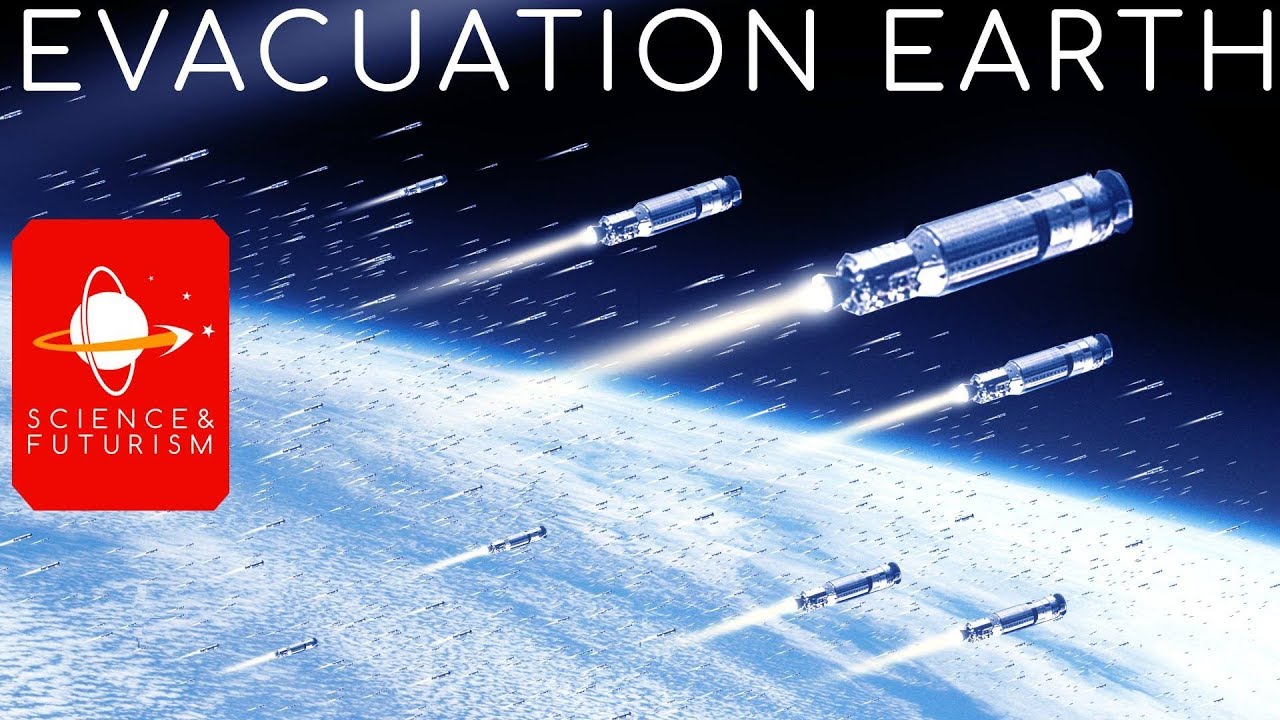
Evacuating Earth
Keywords
Summary
193 words
Critical Evaluation
Value of the Information & Strength of the Argument
The video provides substantial value by systematically analyzing a wide range of disaster scenarios and evacuation methods, grounding them in physics and engineering principles. Arthur’s argumentation is logical and well-structured, often challenging common tropes (e.g., the need for scientists, the feasibility of asteroid deflection). He effectively uses thought experiments and quantitative estimates (e.g., packing density, ship size) to make abstract concepts tangible. The reasoning is generally sound, though some claims (e.g., the ease of mind uploading) are speculative and presented as plausible rather than certain. Overall, the video offers a rigorous and thought-provoking exploration of a complex topic.
Scientific Rigor, Source Quality, Title Accuracy
The video demonstrates strong scientific rigor by consistently referencing established concepts (e.g., Kugelblitz black holes, O’Neill cylinders, orbital rings) and avoiding unsupported claims. It does not cite specific external sources, but the reasoning is internally consistent and aligns with known physics. The title accurately reflects the content, which is a comprehensive and technically detailed discussion of planetary evacuation. The video’s quality is high, with clear explanations and a logical flow, though it remains a conceptual exploration rather than a formal study.
194 words
Title / Content Match
The title accurately reflects the content, which systematically explores methods and challenges of evacuating Earth in various disaster scenarios.
Quality & Reliability
8/10
The video presents a well-reasoned, technically informed discussion of planetary evacuation scenarios, grounded in known physics and engineering concepts. It avoids sensationalism and clearly distinguishes between speculative and established ideas. The reasoning is logical and internally consistent, though it remains a conceptual exploration rather than a peer-reviewed study.
Key Moments
Markers derived by PSI from the transcript: the creator did not define chapters.
- Introduction: four key notes on evacuation (time, destination, ecology, prevention).
- Discussion of supernova and asteroid scenarios, arguing prevention is easier than evacuation.
- Triage and selection criteria for who gets saved; critique of 'best and brightest' approach.
- Modern advantages: DNA storage, artificial reproduction, and the ease of preserving ecology.
- Feasibility of a lunar colony with current technology; the role of mass production.
- Cryogenic freezing as a method to evacuate billions; ship size estimates.
- Mind uploading as an alternative to physical evacuation; storage requirements.
- Megastructure-scale solutions: moving entire sections of the planet's crust; gravity challenges.
- Discussion of orbital rings and space elevators for mass evacuation.
- Conclusion: humanity is approaching an era where natural disasters no longer threaten extinction.
Cited Sources
- Isaac Arthur Website — Official website for the channel, providing additional resources and information.
- Nebula — Streaming platform where Isaac Arthur's content is available.
- Reddit - r/IsaacArthur — Community discussion forum for the channel.
- Subscribestar — Platform for supporting the creator.
- Mafic Studios — Graphics team credited for the video's visuals.
Concurring Sources
- Isaac Arthur's other episodes — The video references concepts from previous episodes (e.g., Space Warfare, Upward Bound) that align with its content.
Contribution & Novelties
The video offers a comprehensive and systematic framework for thinking about planetary evacuation, synthesizing concepts from physics, engineering, and futurism. It challenges common assumptions (e.g., the need to save scientists) and introduces quantitative estimates that make the problem tangible. The discussion of cryonics and mind uploading as practical near-term options is particularly novel in a mainstream context.
Pour aller plus loin :
- O’Neill cylinder — A space habitat concept referenced as a benchmark for evacuation capacity.
- Kugelblitz (black hole) — A theoretical black hole formed from radiation, discussed as a potential power source and threat.
- Cryonics — The practice of freezing humans for future revival, central to the evacuation strategy.
- Mind uploading — The hypothetical transfer of a brain’s contents to a digital medium, discussed as an alternative to physical evacuation.
- Orbital ring — A proposed megastructure for space access, mentioned as a key technology for mass evacuation.
148 words
Radar Profile
The radar profile shows high scores in information quantity, quality, and reliability, with a slightly lower technical level. This indicates a well-researched and informative video that is accessible to a broad audience while still offering depth for enthusiasts.
💬 Très positif. Sur les 30 commentaires analysés, les spectateurs expriment un enthousiasme marqué pour le contenu, saluant la créativité et la rigueur d'Isaac Arthur, avec des remarques humoristiques sur les idées grandioses proposées.