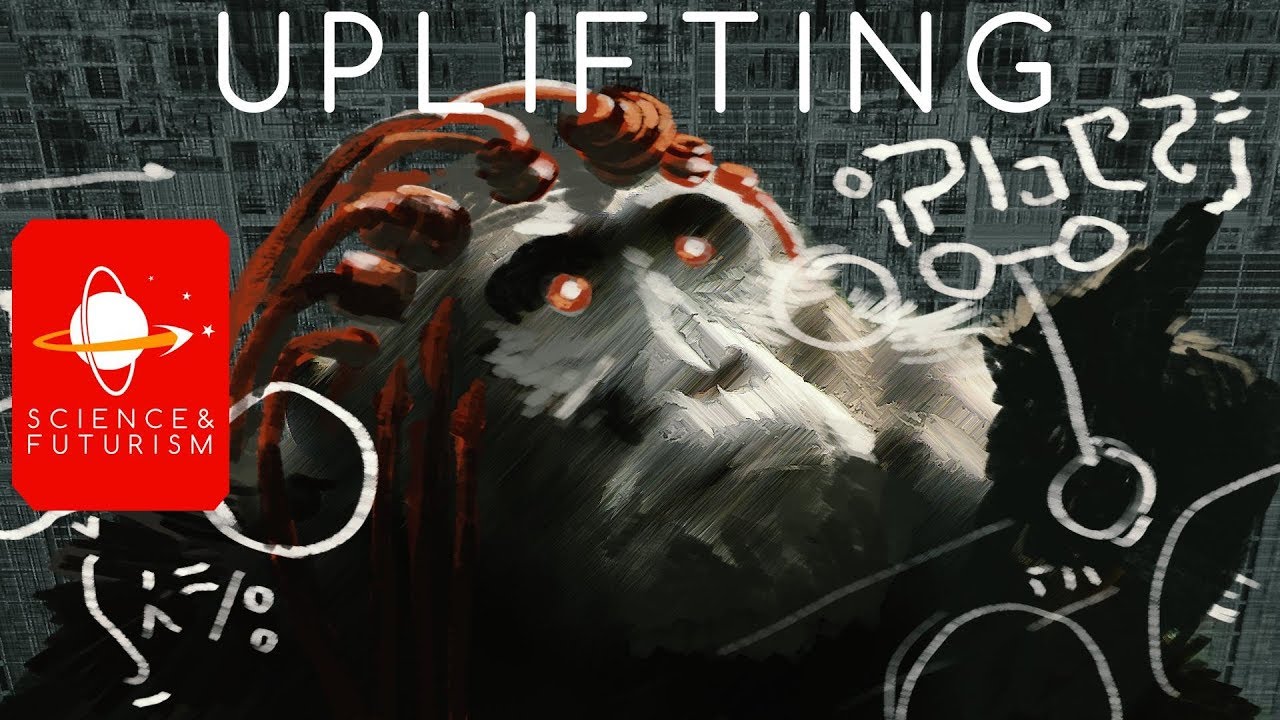
Uplifting Animal & Aliens, Part 1 of 2
Keywords
Summary
204 words
Critical Evaluation
Value of the Information & Strength of the Argument
The video provides substantial value by systematically exploring the multifaceted concept of uplifting, breaking it down into technological, physiological, and neurological aspects, and examining each through a detailed thought experiment. The argumentation is solid, as Arthur carefully considers counterarguments and ethical nuances, such as the potential for uplifted species to resent their creators or the difficulty of enforcing non-interference. He also integrates relevant scientific concepts, like the cost of brains and the Fermi Paradox, to ground the speculation. The reasoning is logical and well-structured, making complex ideas accessible without oversimplifying.
Scientific Rigor, Source Quality, Title Accuracy
The video demonstrates scientific rigor by clearly distinguishing between established science, speculative concepts, and ethical considerations. Arthur references real scientific principles, such as the evolutionary cost of intelligence and the Fermi Paradox, and cites science fiction works that have shaped the discourse, including those by H.G. Wells and David Brin. The sources mentioned are appropriate for the speculative nature of the topic, and the host is transparent about the hypothetical scenarios. The title accurately reflects the content, and the video’s structure is coherent, with a clear progression from definition to ethical analysis.
197 words
Title / Content Match
The title accurately reflects the content, which explores the concept of uplifting animals and aliens in a two-part series.
Quality & Reliability
8/10
The video presents a well-structured thought experiment grounded in established science fiction concepts and ethical frameworks, with clear reasoning and acknowledgment of uncertainties. The host is known for rigorous speculative content, and the discussion is logically coherent, though it remains speculative and not based on empirical data.
Key Moments
Markers derived by PSI from the transcript: the creator did not define chapters.
- Introduction to the concept of uplifting and the collaboration with John Michael Godier.
- Historical origins of uplifting in science fiction, referencing H.G. Wells and David Brin.
- Discussion of the three types of uplifting: technological, physiological, and neurological.
- Thought experiment with the Crustaceans, a tool-using alien species on an ocean planet.
- Ethical dilemmas of uplifting Earth's species, including dolphins and chimpanzees.
- Exploration of hive minds as an alternative to individual uplift, using ants as an example.
- Discussion of the practicality of enforcing non-interference policies like the Prime Directive.
- Long-term consequences of uplifting, including the potential for creating new civilizations and moral dilemmas.
Cited Sources
- Isaac Arthur's Website — Official website for the channel, providing additional resources and information.
- Nebula — Streaming platform where Isaac Arthur's content is available.
- Soundcloud Audio — Audio version of the episode, though the link appears to be for a different episode.
- Cover Art by Jakub Grygier — Artist's portfolio for the cover art used in the video.
- Reddit Community — Subreddit for discussions related to Isaac Arthur's content.
- Subscribestar — Platform for supporting Isaac Arthur's work.
- Part 2 of the Collaboration — Link to the second part of the collaboration with John Michael Godier.
Concurring Sources
- Uplift (science fiction) — Wikipedia article on the concept of uplifting, which aligns with the video's definition and examples.
- Fermi paradox — The video references the Fermi Paradox as a context for discussing alien civilizations, and this source provides background.
- Prime Directive — The video discusses the Prime Directive as a contrasting ethical framework, and this source explains the concept.
Dissenting Sources
- No discordant sources found — The video is speculative and does not present empirical claims that would conflict with established scientific sources.
Contribution & Novelties
The video offers a novel framework for discussing uplifting by categorizing it into technological, physiological, and neurological types, and applying this framework to hypothetical alien species. It also explores the ethical implications of uplifting in a nuanced way, considering both the potential benefits and the risks of creating new civilizations. The discussion of hive minds as an alternative to individual uplift adds a unique perspective.
Pour aller plus loin :
- Uplift (science fiction) — Overview of the concept in science fiction, including David Brin’s Uplift Saga.
- Fermi paradox — The paradox that motivates much of the discussion about alien civilizations and their rarity.
- Prime Directive — The Star Trek concept of non-interference, which is central to the ethical debate.
- Animal cognition — Scientific background on animal intelligence, relevant to the feasibility of uplifting.
- Ethics of genetic engineering — Ethical considerations related to modifying organisms, applicable to uplifting.
147 words
Radar Profile
The radar profile shows high scores in information quantity, quality, and reliability, with a slightly lower technical level, indicating that the video is content-rich and well-reasoned but accessible to a general audience. The balance suggests a strong educational value with a focus on ethical and speculative aspects rather than deep technical detail.
💬 Très positif. Sur les 30 commentaires analysés, l'enthousiasme est dominant, avec des références humoristiques et des remerciements pour la qualité du contenu, ainsi qu'un intérêt marqué pour les implications éthiques et les suites de la série.