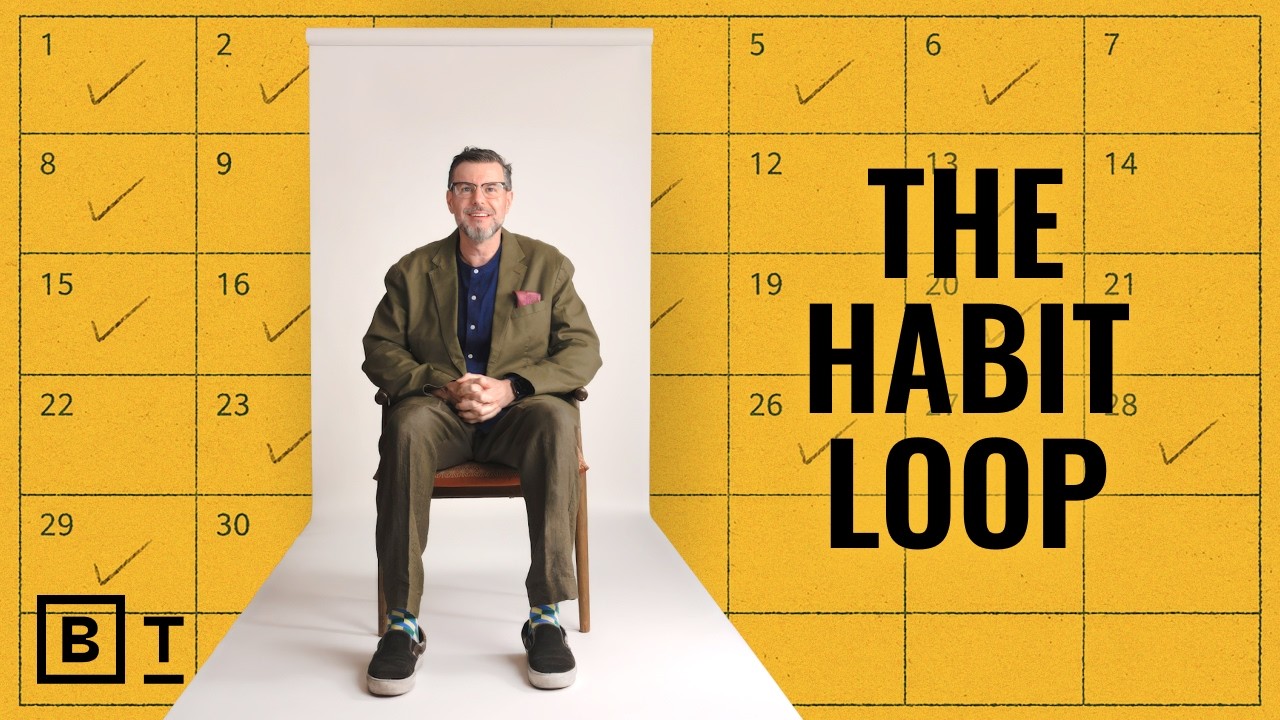
Willpower is the wrong tool for changing habits. Do this instead. | Charles Duhigg: Full Interview — Note de synthèse
Note de synthèse · Post Singularity Institute
Willpower is the wrong tool for changing habits. Do this instead. | Charles Duhigg: Full Interview
par Charles Duhigg
🎙️ Charles Duhigg👥 8.8M📅 June 12, 2026⏱ 87 min👁 165K🔬 Neuroscience
Keywords
habit loopcueroutinerewardcravingkeystone habitwillpowerbehavior changeimplementation intentiongolden rule of habit change
Summary
Charles Duhigg explains the neuroscience of habit formation and change, emphasizing that willpower alone is insufficient. He introduces the habit loop (cue, routine, reward) and the golden rule of habit change: replace the routine while keeping the cue and reward. He describes how to identify cues (time, place, people, emotion, preceding behavior) and rewards through experimentation. Duhigg discusses keystone habits that trigger widespread change and the role of beliefs and communities in sustaining habits. The second part of the interview shifts to communication, introducing concepts from his book 'Supercommunicators' about different conversation types (practical, emotional, social). The interview is based on his research and reporting, drawing on studies in neuroscience and psychology.
Critical Evaluation
The interview provides a clear and engaging overview of habit science, grounded in Duhigg's well-known book 'The Power of Habit'. The core concepts—habit loop, cue-routine-reward, golden rule of habit change—are accurately presented and align with established research in behavioral neuroscience. Duhigg's anecdote about his cookie habit effectively illustrates the experimental approach to identifying rewards. However, the video lacks specific citations for many claims; for instance, the statistic that '40-45% of daily actions are habits' is mentioned without a source. The discussion of keystone habits and community influence is insightful but could benefit from more rigorous evidence. The second part on communication, while interesting, feels somewhat disconnected from the habit theme and is less scientifically grounded, relying more on Duhigg's journalistic observations. The title is catchy but accurate: the video does argue that willpower is not the primary tool for habit change. Overall, the information is reliable for a general audience but lacks the depth and referencing expected in a scientific review. The video's strength lies in its practical advice and clear explanations, but it does not critically examine limitations or alternative theories. The absence of counterarguments or discussion of when habit change fails reduces its scientific rigor. The production quality is high, and Duhigg's credibility as a science journalist adds weight, but the interview format limits the depth of analysis.
The video synthesizes well-known habit science concepts into a practical framework, emphasizing the golden rule of habit change and the importance of identifying cues and rewards. It also introduces the concept of keystone habits and the role of community in sustaining change. The second part on communication offers a novel categorization of conversation types, though it is less directly related to habit science.
Pour mieux comprendre :
- Habit loop - Wikipedia — Provides a comprehensive overview of the habit loop model and its neurological basis.
- Basal ganglia - Wikipedia — Explains the brain region responsible for habit formation, referenced in the video.
- Implementation intention - Wikipedia — Describes the psychological strategy of planning specific actions to achieve goals, related to Duhigg's advice on changing habits.
Radar Profile
The radar profile shows moderate scores across all dimensions, with a slight dip in technical level. This reflects the video's accessible yet informative nature, suitable for a general audience but lacking deep technical detail. The balance between information quantity and quality indicates a well-structured presentation, though the reliance on anecdotal evidence limits scientific rigor.