space elevatorcarbon nanotubesAI materials discoverygeostationary orbittensile strength
Summary
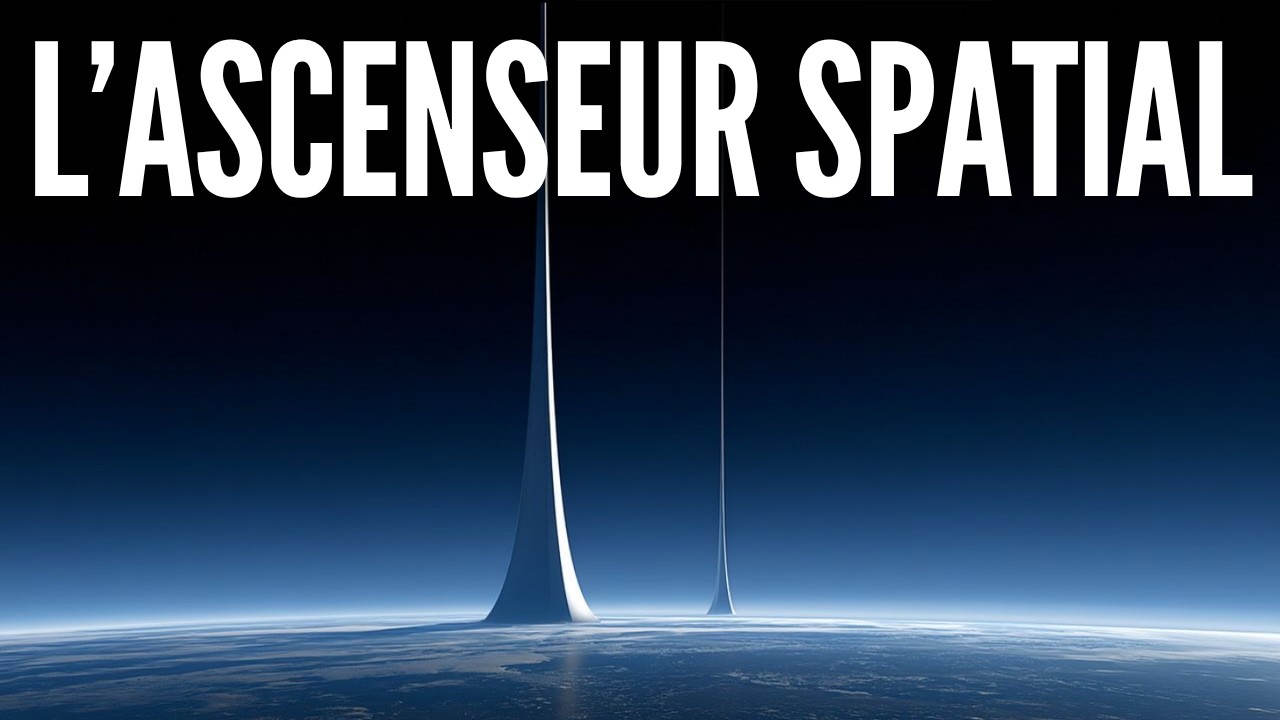
The video explores the concept of a space elevator, a structure that could drastically reduce the cost of space access. It explains the fundamental physics: a tower is impossible due to compression limits, but a cable in tension from geostationary orbit is theoretically feasible. The cable must be tapered, with the thickest part at geostationary altitude, and requires a counterweight extending beyond. The main obstacle is the material: conventional materials like steel or Kevlar would require impossibly large cross-sections. Carbon nanotubes, discovered in 1991, have the necessary strength-to-weight ratio but are not yet producible in macroscopic lengths. The video then introduces AI as a tool for discovering new materials, citing a Nature article on deep learning for materials discovery. It discusses the potential of AI to accelerate the search for materials suitable for a space elevator. The video also covers practical challenges such as space debris, the Van Allen belts, and the possibility of building a lunar elevator first. Overall, it presents a balanced view of the space elevator's promise and the remaining hurdles.
Critical Evaluation
The video provides a comprehensive and engaging overview of the space elevator concept, effectively communicating the key physical principles and material challenges. The explanation of why a tower is impossible and why a tension-based cable is the only viable approach is clear and accurate. The discussion of the exponential thickening required for conventional materials is particularly effective in illustrating the scale of the problem. The video correctly identifies carbon nanotubes as a promising candidate due to their exceptional tensile strength and low density, and it acknowledges the current limitations in manufacturing them at scale. The introduction of AI as a tool for materials discovery is timely and relevant, referencing a legitimate Nature article (Scaling deep learning for materials discovery). However, the video's title suggests that AI is already discovering materials that change everything, which is somewhat exaggerated. While AI has accelerated materials screening, no AI-discovered material has yet been demonstrated to be suitable for a space elevator. The video itself notes that carbon nanotubes remain the leading candidate, and AI is more of a future promise. The discussion of space debris and the Van Allen belts adds important context, though the treatment of these hazards is somewhat superficial. The video's strength lies in its clear exposition of the engineering and physics, but it could benefit from a more critical examination of the economic and political feasibility. The sources cited are credible, including the Nature article and a book by Yann LeCun, though the latter is only tangentially related. The video does not present any original research but serves as a well-researched synthesis. The tone is appropriately enthusiastic without being misleading, though the title leans toward sensationalism. Overall, the video is a valuable educational resource for a general audience interested in space technology and materials science.
The video's main contribution is its clear and accessible synthesis of the space elevator concept, highlighting the critical role of materials science and the potential of AI to discover new materials. It effectively communicates the exponential material challenge and the promise of carbon nanotubes. The inclusion of AI as a tool for materials discovery is a timely addition, though the video does not present new research. It serves as a bridge between popular science and technical concepts.
The radar profile shows high scores in quantity of information and fiabilite globale, reflecting the video's comprehensive and accurate coverage. The niveau technique is moderate, suitable for a general audience, while qualite_information is slightly lower due to some sensationalism. Overall, the video is a reliable educational resource.